
Between annual surveys, the truth about your stock’s warmth, damp, and welfare is invisible. Verity makes it visible — continuously, independently, and in a form you can stand behind.
Annual surveys tell you what was true on one day. Regulatory deadlines tell you what’s required. Neither tells you which homes are cold, which are damp, and which residents are living with both — right now, between inspections. These are the six things Verity changes.
Between annual surveys, there’s no way to see which homes are actually failing to stay warm — until a tenant complains or a surveyor visits.
Verity watches continuously, from small indoor sensors, and surfaces the homes sitting below the 18°C health minimum. You direct attention and spend where homes are genuinely cold, not just where the complaints are loudest.
WHO 18°C minimum. The World Health Organisation sets 18°C as the minimum safe indoor temperature for healthy living. Verity flags every connected home that falls and stays below it.

Mould takes hold where relative humidity stays above 70% for sustained periods — and by the time it’s visible, the damage is done.
Verity tracks humidity against that mould-risk threshold continuously, flagging the conditions that lead to mould weeks before it appears. Early, measured, and dated — so you act before a repair becomes a disrepair claim.
70% RH threshold. Sustained relative humidity above 70% is the established threshold at which mould development risk increases significantly. Verity logs every breach by property, by day.
Every flag Verity raises is a measurement, not an opinion. When a home crosses a health or mould threshold, it’s recorded as a dated event — how cold, how damp, for how long.
That builds a continuous, defensible record over the year: not one bad night, but a documented pattern you can produce the moment a regulator, an ombudsman, or a board asks for it.
📋 A dated, measured pattern — produced continuously without anyone having to compile it. Ready for submission before anyone asks for it.
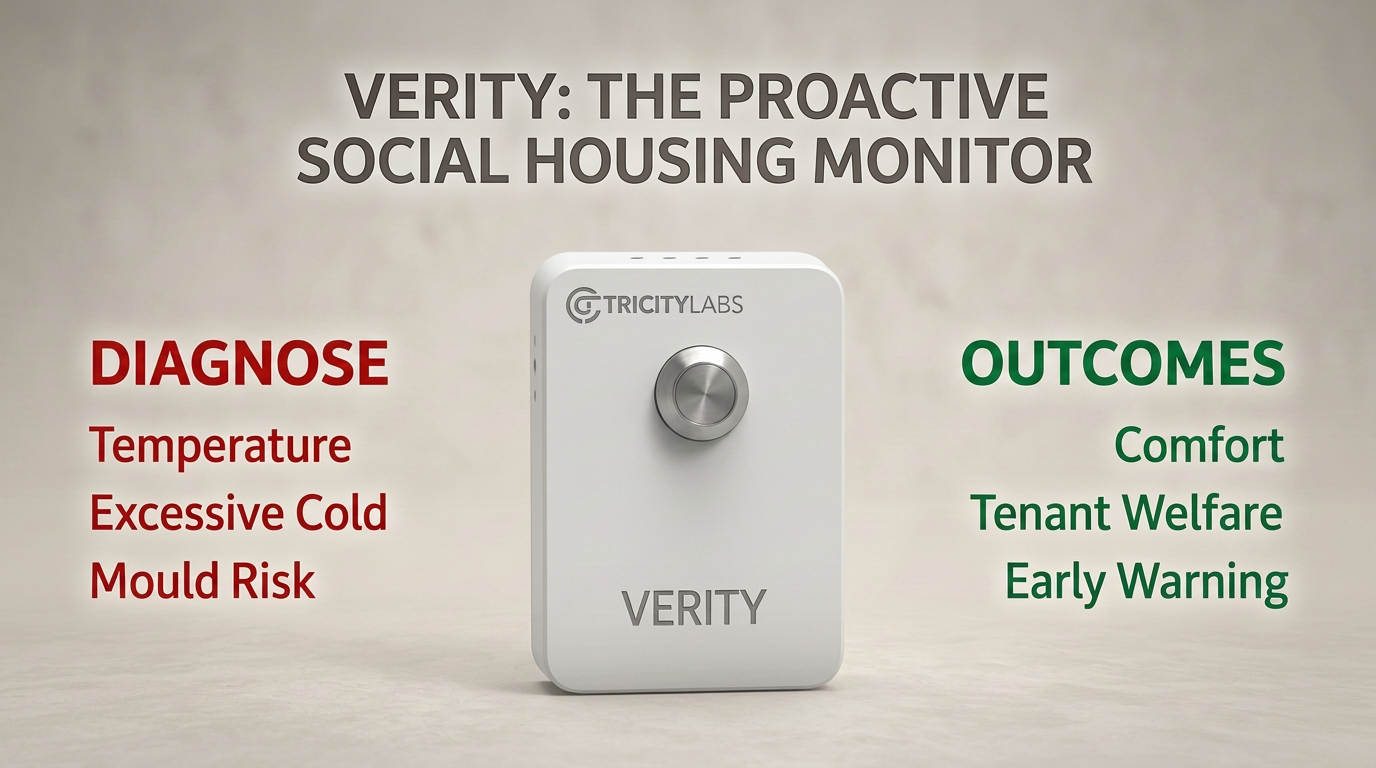
Verity measures and evidences — it doesn’t sell you the retrofit, specify the works, or advise the fix. That independence is exactly what makes the evidence credible: a neutral record with no stake in the outcome.
It’s the difference between a supplier marking their own homework and an instrument you can trust in front of a tribunal.
No retrofit delivery interest
Tricity Labs does not install, specify, or commission retrofit works. No financial interest in what the evidence recommends.
Observations, not opinions
Temperature measured. Humidity measured. Occupancy confirmed. The inference is yours. The evidence is ours.
BS 40101 aligned
Building Performance Evaluation that meets the independence requirement of the British Standard — defensible at audit, at inspection, and at tribunal.
Cold and damp only matter when someone’s living in it.
Verity shows not just temperature and humidity but whether a home is occupied — so a cold, damp, lived-in home rises to the top as a genuine welfare concern, while an empty void doesn’t cry wolf.
It’s the signal a housing team needs to reach vulnerable residents before harm is done.
“A cold empty home is a maintenance job. A cold occupied home is a duty of care. Occupancy is what makes the difference — and only Verity can see it.”
Below 18°C, flagged per room, per period.
Above 70% RH, tracked continuously, logged by date.
Passive infrared confirms someone is living in the conditions being measured. Cold + damp + occupied = welfare priority.
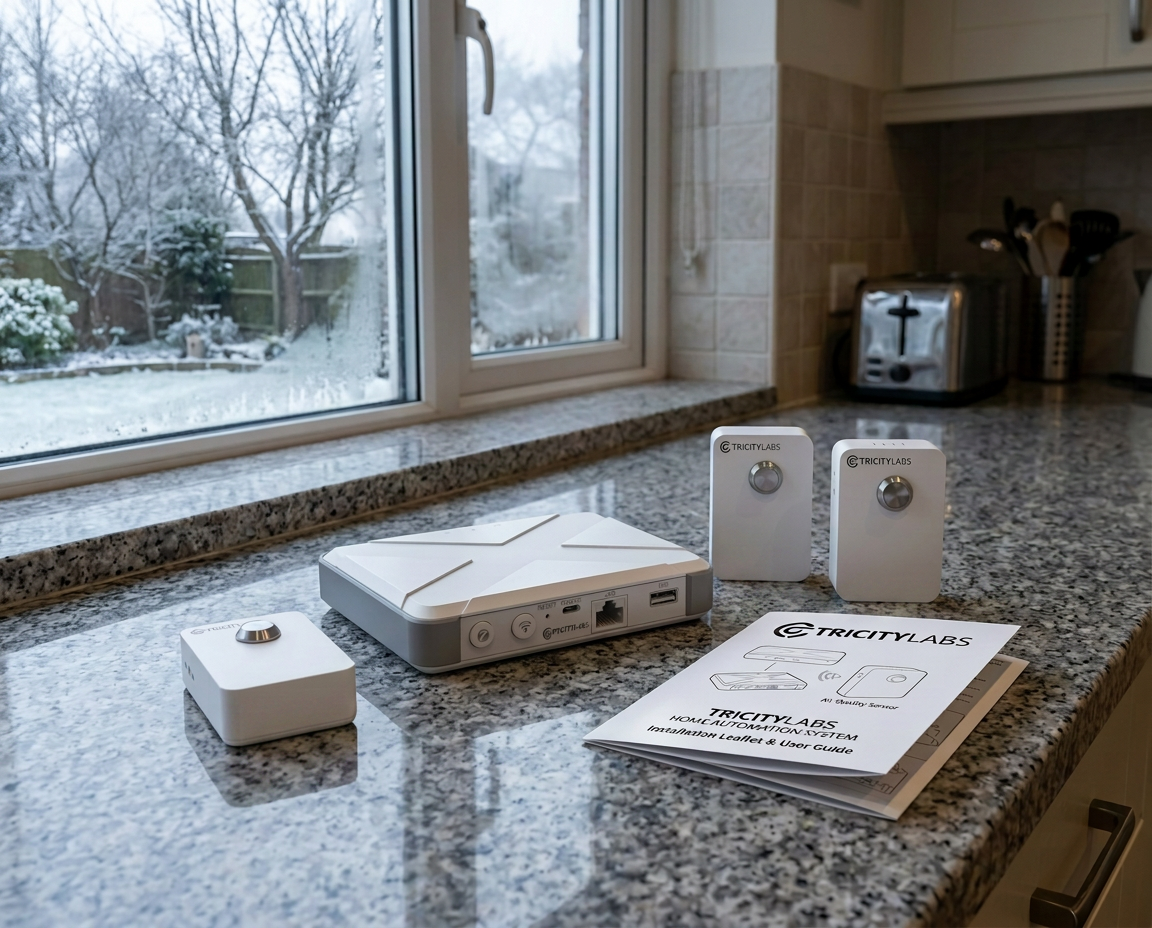
No smart-meter data. No tenant consent process. No electrician.
Small indoor sensors go on the wall and start producing evidence within weeks — no disruption to the resident, no wiring, no waiting on a data-sharing agreement.
The lowest-friction way to see the truth about your stock’s warmth and damp.
A short conversation is enough to scope the right pilot — which properties, what evidence you need first, and how quickly you can have sensors in place.